
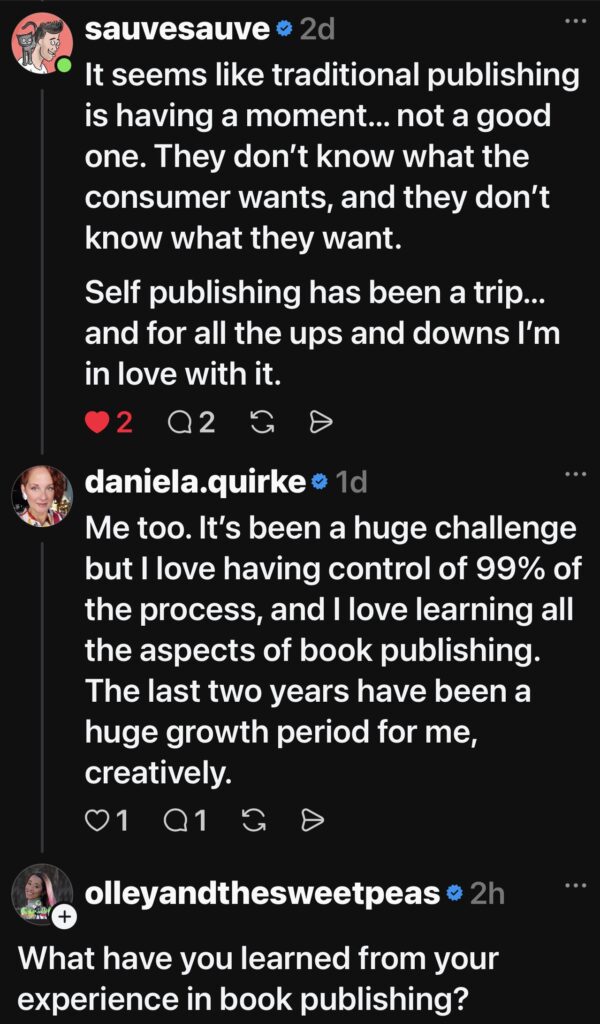
Last week, I had this exchange on Threads with indie author-artist Raul Sauve (@sauvesauve), and another author-artist, Elena Catherine, popped in and asked the question about what we’d learned from self-publishing. I didn’t have time to respond in the moment, and truth be told, I don’t think I’ve had a chance to sit down and account for all my learnings over the past two years. So this week, I decided to write a blog post about it.
I’ll start by saying that the decision to go the indie route and self-publish was not taken lightly. I don’t think my choice is the only right one, and each author has to weigh the pros and cons for themselves. Writing a novel is an exercise in optimistic foolishness. You spend months, sometimes years, pouring your heart and soul into a project with no guarantee that anyone will buy it or read it. And investment of thousands of hours of ego-challenging work, with an extremely high likelihood of it being ignored. And that’s just the writing part. When you decide to self-publish, you’re taking on a whole boatload of additional work, and without the supportive network of the publishing industry at your back.
Still, this was my choice, and I made it for what I consider good reasons. So, dear reader, I will share with you now my learnings from this process so that you might be better prepared for your own self-publishing journey:
- Be Prepared To Be Lost
I realize this analogy doesn’t work for everyone, but as someone who has birthed two children into the world, I keep coming back to how similar the experience of pregnancy and birth was to writing and publishing a novel. Back when I was preggers with the Qlets, I spent hours reading books and websites, talking to other moms, and generating human life as if it were rocket science. I had charts and graphs and feeding schedules and lists. I spent nine months trying to make sure I was doing everything perfectly, preparing to step into this new role of motherhood with great success.
Within a week after bringing those babies home, Mr. Q and I had gone to the mattresses. It was survival 24/7. All the reading, all the conversations, and classes – useless. We were in uncharted territory, figuring shit out minute-to-minute.
Self-publishing brought me back to that time. Deja vu! I’d thought I knew what I was in for. I’d prepared so well for it. But it wasn’t until I began the process of publishing that I realized how dynamic a situation it is. You just don’t know what you don’t know. Ya know?
Which is not to say that you shouldn’t try to prepare and educate yourself ahead of time. Only that you’re going to find yourself with infinitely more questions, trying to make decisions you’ve never made before, with a sense of urgency and crushing fear of failure underlining it all. Fun right?
2. Congratulations, You’re a Project Manager Now!
If you’ve ever worked in the tech industry, you are familiar with that special creature known as the project manager. These cursed souls have the crushing responsibility of taking a monumental task, consisting of infinite moving parts, bazillions of variables, and a bunch of oversized egos, and getting everyone to the finish line a/k/a – the deadline.
Choosing to publish your own book is a similar feat, because to successfully launch, you have to coordinate editors, designers, alpha and beta readers, marketing partners, book sellers – and if you have a launch event, you’ll either have to plan for that or hire someone and manage them to do it. It’s… a LOT. And all of these things have to work together. If even one of these important things gets delayed, you have to go back and adjust deadlines and agreements.
Spreadsheets, timelines, Zoom calls, and email are your daily life. You don’t get to hide in a hole and write your novel and then shoot it off to someone who will carry it to the finish line for you. No, self-publishing authors are running a business and managing a project at the same time they’re in the creative trenches. You have to be able to adjust course quickly, make quick calls, and make your mistakes look like they were intentional.
3. Marketing is a Necessary Evil
Millions and millions of people write books every year. This doesn’t even include the grifters using AI to “write” dozens of novels a year for page-read profits on Amazon. Your book is competing in the marketplace against those produced by established publishing houses and indie authors with established audiences. If you want to sell more books than your friends and family want to buy, you have to do marketing.
Lots of authors complain endlessly about this on social media, and I don’t blame them. Marketing sucks. I know, because I did it for 25 years as a career. It’s tedious and frustrating for me – so I can imagine how it must feel for someone who has never had to do it full-time. But if you’re going to go indie, you must have a marketing plan. It must be specific, and you must discipline yourself to carry it out even when you don’t feel like it. Also, you must be willing to invest some money into it.
At some point, I plan to write my best marketing tips for indie authors, but suffice to say: none of it is privileged information, and everything you need to know you can find out for free online. You can figure it out. Marketing isn’t hard because it requires any special talent or a specific degree; it’s hard because it requires consistency and creative energy that you would rather be using somewhere else.
Which brings me to the vultures. Because authors (and lots of other indie creators and businesses) hate marketing, they have created a… market. As soon as you announce yourself as an indie creator online, you’ll be inundated with offers from ‘marketing pros’ who claim to be able to help you. Some of these folks are legit. Most are not. The ones who are legit are probably too expensive (unless you’re independently wealthy). Beware. Until you have an established audience and a strong handle on your brand, you are in the best position to promote your own book.
4. Everyone Has Opinions
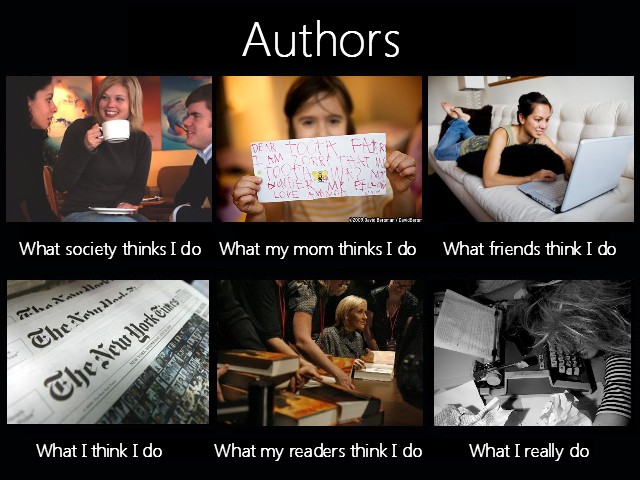
If you think you’re going to get clear answers about how to do all this stuff by asking on Threads or BlueSky, you’re in for a real treat. And by ‘treat’ I mean, a barrage of opinions from people who may or may not have any knowledge of you, your project, publishing, marketing, or media. Even if they do have some understanding of these subjects, you are the only person who really knows what you need.
You’ll get people telling you shit like, ‘you have to have x# rounds of editing to be legit,’ and ‘you need a minimum of x# beta readers,’ and ‘if you don’t write every day, you’re spitting in the face of the muse.’ Endless opinions about the shit you’re wading through daily in the self-publishing process. A lot of times – maybe most of the time – there is no right or wrong answer. But you feel insecure and worried, and you want so badly to succeed. So you listen to everyone, and then you’re even more insecure and worried, and afraid you won’t succeed.
The best advice I can give you (having gone through all this myself) is to find a community of authors – an actual community with some stakes and some privacy where you’re not exposed to every jackass who feels like voicing an opinion – and talk to them when you feel stuck. Even then, you’ll take their guidance with a grain of salt and make your own decision about what’s going to work well for you.
Self-publishing is not for people who need to be told what to do every step of the way.
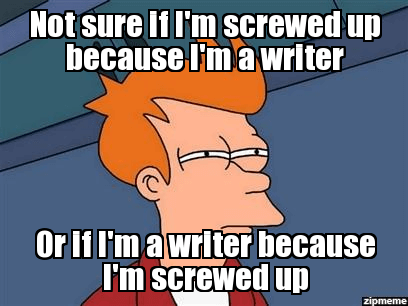
5. You’re Your Own Worst Enemy
Something weird happens when you decide to write and publish a book. Suddenly, all your deepest hangups, fears, insecurities, and self-loathing come out to tell you terrible things about yourself. Creative work is challenging on multiple levels. You sit down to write a passage, and before long, you’re hearing your mother’s voice in the back of your head telling you you’re not good enough, and having a meltdown. So much of our creative power is trapped within dysfunction and lifelong stories we tell ourselves about our worth.
Know this: everyone is going through it. Some of the greatest creative geniuses since the dawn of time have openly discussed their battles with their inner demons. You may never feel okay about what you’ve made, and that’s ok. Because you’re still going to do it. Because you need to.
6. You Are Your Own Best Ally
A friend of mine once said something that changed my entire perspective on what I can/should expect from other people. She said, “People aren’t against you. They’re just for themselves.”
Putting creative work out into the world is terrifying. You feel vulnerable. You desperately crave acknowledgment, if not praise and encouragement. Many, MANY times, you are met with resounding silence. It’s hard not to take this personally and assume it’s because others don’t like you or don’t want you to succeed. Nine times out of ten, though, when you don’t get the support you hoped for, it’s because people are so focused on their own work, their own vulnerability, and their own desire to succeed.
And that’s why you have to be your own #1 cheerleader. You have to be the one out there, every day, beating the drum for book sales, shouting from the rooftops about your work, celebrating your own successes. This, of course, means that you have to at least believe in yourself a little bit. It’s hard, I know. But this kind of confidence and self-appreciation doesn’t come from external validation, and it never will. It comes from knowing – not just thinking or believing – but knowing that you have every right to share your creative work.
7. You Can’t Do It Alone
All that to say, you still can’t do it alone. Community is essential for anyone who is making their creativity their occupation. And when I say ‘community,’ I don’t mean camping out on Threads all day. The word community is thrown around a lot in the digital age, but being on the same platform with, or having the same interests as, a bunch of passing strangers is NOT community.
What is community?
- Defined space, physical or digital, that not everyone has equal access to.
- A place where you know the people in it, and are known by them – and not in some superficial way
- There is a social contract involved, where there are expectations about belonging
- It doesn’t revolve around an individual or a clique of special people
- You have obligations as a member
- There is collective history, and group communication builds on previous engagement. You’re not starting from scratch with the same goddamn conversations every day.
This is one of the hardest things to find, and it’s tempting to just go it alone. Especially if you’re an introvert (like me). But I will say, my book could not have been published if I hadn’t had access to a group of other writers who are committed to inspiring, educating, promoting, and celebrating one another.

8. Perfection is Not Possible
If you are a perfectionist, I have some bad news. There is literally no way to write and publish a perfect book by yourself. Even books that come from Big 5 houses with full-time editors and designers have an acceptable margin of error. Obviously, you want to represent yourself and your work in the best way possible. ‘Indie’ shouldn’t signify ‘low standards.’ That said, mistakes will emerge. Things will not go to plan. You have to accept this. Fix what you can. Do better next time. Everything is learning. And you can still be proud of what you’ve done.
9. Celebrate Your Win, Your Way
Find a way to celebrate your accomplishments, even if you have a small audience and little-to-no budget. Writing and publishing a book is a huge accomplishment. HUGE. Very few people manage to do it, and for many of us, it’s a literal dream come true. Let yourself bask in the glory of having created something special and unique. Celebrate all the hard work and discipline, the tears and the panic that led you to this point. Celebrate the little milestones along the way. My god, this is hard and thankless work!
When it’s time to launch, I beg of you, have some kind of event. Even if it’s just a friends-and-family thing at your house, or at a restaurant. Let yourself and your work be seen. You will be amazed at who shows up for you, and who comes back later to tell you that you’ve inspired them to do some brave, creative thing themselves.
10. Author, Know Thyself
You are going to learn a lot about yourself in the process of publishing your own book. It’s going to change you and challenge you in unexpected ways. I grew so much in the 2.5 years it took me to complete my debut novel, and I came face-to-face with myself and my limitations. I saw what I wanted to produce, and I had to acknowledge what I could produce.
This work is an ongoing process. You can’t skip over the hard parts, and you can’t go from zero to genius in one big step. You have a vision for yourself and your work? Great! You’ll get there. But that doesn’t invalidate your abilities right now, and it doesn’t mean you can’t go ahead and publish work that is below genius-level until you get there.
I once read a quote from a popular author (can’t remember who) where they were discussing how they look back on their work and cringe… and that is part of the process of being a creator. You’re never done growing. Your past work will always fall short, and that’s ok. As long as it’s the best thing you can produce at the time.
Be honest with your abilities. Know where you need to improve. Take steps to refine your skills. Seek constructive criticism. Tell shame to fuck right off, but also, understand that no matter how good you are, you can always get better.
Ok. That’s all I have for now. I may think of more later, but I hope this answers the question. There are a million other little things I learned through this process, as well. About finding professional editors and designers to work with; about using the book-building software; about my own best practices for writing and editing. But these are the big ones. The ones I think hinder perfectly good writers from seeing the finish line. I hope it helps.
Sign up for The Qreative Life newsletter. It’s free!