During the 2010s, there was a marked rise in dystopian fiction in both print and film. Stories like The Handmaid’s Tale and The Hunger Games gained enormous popularity as millennials became increasingly disillusioned in adulthood. More recently, fantasy – including but not limited to the overwhelmingly popular categories of romantasy and vampire fiction – has taken over as readers seek escape from a world where dystopia is no longer fiction.
But I want to talk about a different genre today: science fiction. Specifically, the kind of science fiction that my Boomer parents adored and raised me on. Star Trek. Star Wars. Battlestar Galactica. Asimov. Bradbury. LeGuin.
I give a lot of shit to Boomers, but they definitely had some of the most compellingly optimistic science fiction this world has ever seen. It’s almost quaint, now. A little silly. Naïve, even. A little *too* optimistic, considering our reality. I guess it’s easy to be an optimist when you’re raised in post-war America on a moonshot and a firm belief that your life will be materially better than your parents’ was in every way.
But not everything in my parents’ generation was soda shops and sock hops. By the time the sixties rolled around, things were heating up in America, and we do a disservice to our collective when we gloss over the social, political, and cultural upheavals that generation ushered in. They saw extraordinary change on the ground during the 60s and 70s *because* they were optimistic. They really believed they could make a better world.
Now, look, I’m not here to debate the viability of the Boomers’ vision for the future or the way they’ve greedily kept the spoils of their post-war boon for themselves while the rest of us flail around in survival mode. What I am saying is this: we, the people, need some optimism badly right now. We need to believe that there’s a better future possible, and that sometimes, the good guys/gals win. We need to believe in the beauty of our shared humanity and in the possibilities of technology when it is used well.
And that? Is the job of the artist. Because so much of what is necessary for this kind of societal optimism comes from our imagination. We need to be able to visualize what a better world would look like. Fiction isn’t fact, but it can inspire us to think and feel and ideate in ways that change who we are and the choices we make. And we get to choose which fiction we create, share, and consume.
So, consider this month’s newsletter a call to action for all artists, writers, poets, and musicians who have the ability to envision something better, to create things that help us see a better future.
An optimistic vision of the future doesn’t mean ignoring the realities we face. In fact, the most powerful vision is one that helps us not only see ourselves as better off in the future, but also having overcome big, difficult things to get there. It’s possible to be realistic about our challenges and still dream big.
We don’t need any more wallowing in our sad soup, confirmation biasing ourselves into a complete societal shutdown in which the most vulnerable among us will ultimately pay the price. We need to see our potential clearly and find real hope – not in corrupt institutions and silent gods – but in our shared humanity and in the extraordinary beauty of our existence.
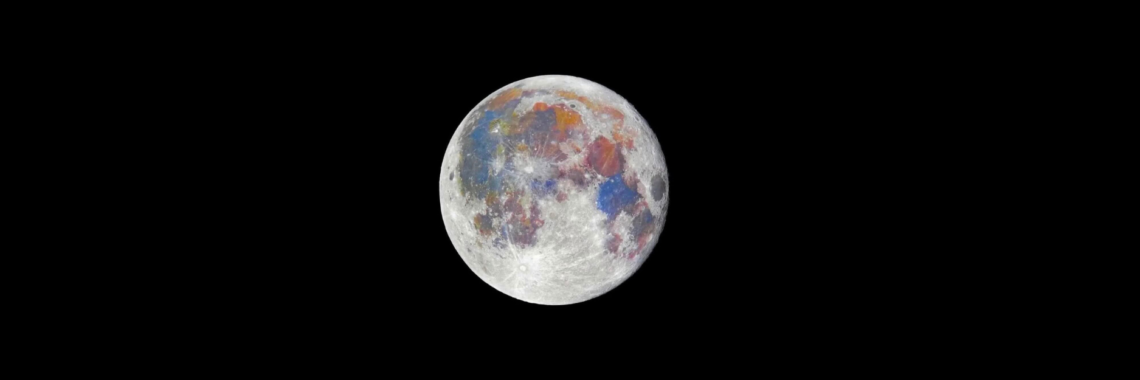
Last week, Artemis II sent back some spine-tingling photos of the moon. For a brief second online, it felt like we were all infused with some sense of hope. Pride. Joy. Awe. Wonder. At the same time, Project Hail Mary is having a fantastic run at the box office. People are being reminded that technology and science don’t need to enslave us.
And in fact, technology and science have never been the enemy.
The enemies of humanity are the same people they’ve always been, since the dawn of time: weak, self-aggrandizing, greedy, and egomaniacal men (and women) who believe they deserve something more than the rest of us. Those who believe we are, at best, tools; at worst, expendable fodder in the quest for their immortality. Those whose power and wealth have disfigured their hearts and turned them into monsters. Those who believe our shared gifts of technology and science are theirs to wield against us.
It’s bullshit, and we’ve bought it for too long.
These are our tools. This is our planet. And we are not going down for the Shangri-la-fountain-of-youth-city-of-gold-chasing motherfuckers who have always fucked up this world for the rest of us. We’re just not.
Make art. Do crime. Hope, rebelliously.
Love,
Q.
Sign up for The Qreative Life newsletter. It’s free!